On April 23, 1775, Joseph Mallord William Turner was born. English landscape painter and skilled architectural draughtsman, he produced sketches and paintings that capture historical images of landscapes, seascapes, and cityscapes. Attracted to qualities of light, Turner studied its effects on the subjects of…
On April 16, 1682, English mathematician and instrument maker John Hadley was born. He developed precision mirrors to improve the accuracy and power of the reflecting telescope. Until Hadley, telescopes used mirrors that were spherical in shape. These were often blurry and/or distorted the…
On March 13, 1941, American biophysicist and environmentalist Donella (Dana) Meadows was born. She was a professor of environmental studies at Dartmouth College, New Hampshire. Meadows regarded sustainability as something experienced through living it, an ability she saw in humankind to meet the needs…
On March 8, 1712, English physician and naturalist John Fothergill was born. At the University of Edinburgh, Fothergill moved from studying to become an apothecary to studying medicine, graduating as a doctor. After being licensed to practice in London, he distinguished himself during city…
On March 1, 1872, U.S. President Ulysses S. Grant declared Yellowstone a National Park. Located principally in what is today Wyoming, Yellowstone was not explored until late in the 19th century. By that time, geologists and naturalists were able to help bring to the…
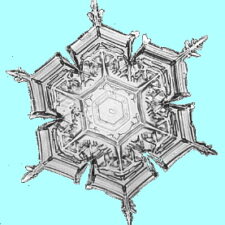
On February 9, 1865, American photographer and pioneering weather scientist Wilson Alwyn Bentley was born. After experiencing the Vermont winter snows for almost two decades, Bentley followed his passion for capturing the beauty of snowflakes for others to share. He managed to figure out…
On February 5, 1947, American astronaut Mary L. Cleave was born. Plant and soil sciences intrigued her as she grew up. She specialized in microbial ecology then concerned herself with what might be possible if she could apply scientific and engineering principles to the…
On January 13, 1957, Wham-O began production of its “Pluto Platters”, the plastic flying dish today called a Frisbee™. Invented by Fred Morrison, the lightweight and elegant airfoil becomes a vehicle of remarkable precision in the hands of a skilled hurler. Inspired by pie…
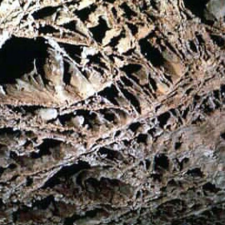
On January 9, 1903, President Theodore Roosevelt established Wind Cave National Park in South Dakota, the world’s first cave designated as a national park. It is named for the whistling, rushing noise of the wind at the mouth of the cave. The cave breathes…
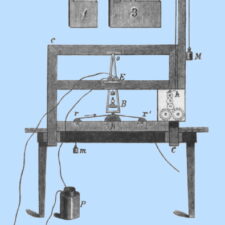
On January 6, 1838, Samuel Morse gave the first public demonstration of the electric telegraph at New Jersey’s Speedwell Iron Works. The message, “a patient waiter is no loser”, tapped in code along two miles of cotton-covered wire, capped one of the most important…