On July 16, 1981, Yoho National Park’s Burgess Shale became Canada’s fifth World Heritage Site of The United Nations Educational, Scientific and Cultural Organization (UNESCO). Within Yoho National Park of Canada, the Burgess Shale holds the deposit of one of world’s most ancient marine…
On May 10, 1946, primatologist Biruté M. F. Galdikas was born. As scientist, conservationist, and educator, she has made uninterrupted study of and invaluable contributions to the scientific understanding of Indonesia’s biodiversity. The orangutan was a species barely known to science before Galdikas initiated…
On April 21, 1838, John Muir was born. Muir was a naturalist who championed the creation of the first National Forests in the United States of America and co-founded the Sierra Club. As an explorer and writer, he inspired President Theodore Roosevelt’s innovative wildlife…
On February 23, 1879, British botanist Agnes Arber was born. From her mid-teens through early career, she was able to spend time assisting plant morphologist Ethel Sargant from whom she acquired her research interest and style of investigation. Arber taught at University College, London,…
On February 4, 1725, English entomologist Dru Drury was born. Working as a silversmith and properties owner, Drury supported himself, his family, and his evolving passion for his bug collecting hobby. He became one of England’s foremost names in the scientific study of insects…
On August 23, 2003, Ukkusiksalik, became Nunavut’s 4th and Canada’s 41st national park. Pronounced /ooo koo SIK sa lik/, the name Ukkusiksalik refers to the carvable stone found in the area from which an ukkusik [pot] is made. Just south of the Arctic Circle…
On March 13, 1941, American biophysicist and environmentalist Donella (Dana) Meadows was born. She was a professor of environmental studies at Dartmouth College, New Hampshire. Meadows regarded sustainability as something experienced through living it, an ability she saw in humankind to meet the needs…
On March 1, 1872, U.S. President Ulysses S. Grant declared Yellowstone a National Park. Located principally in what is today Wyoming, Yellowstone was not explored until late in the 19th century. By that time, geologists and naturalists were able to help bring to the…
On February 5, 1947, American astronaut Mary L. Cleave was born. Plant and soil sciences intrigued her as she grew up. She specialized in microbial ecology then concerned herself with what might be possible if she could apply scientific and engineering principles to the…
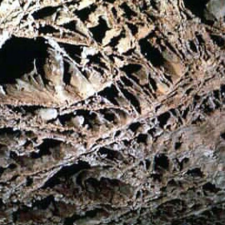
On January 9, 1903, President Theodore Roosevelt established Wind Cave National Park in South Dakota, the world’s first cave designated as a national park. It is named for the whistling, rushing noise of the wind at the mouth of the cave. The cave breathes…